How to Prepare Your Septic System for Winter in Ontario
Winter in Ontario is no joke, and your septic system feels it too. Freezing temperatures, heavy snow, and fluctuating weather can all affect how well your system works. The good news? A little preparation goes a long way. Here’s how to get your septic system winter‑ready so you can avoid cold‑weather surprises.
1. Pump Before the Deep Freeze
A full tank can freeze if not done before the incredibly cold temperatures hit us in Muskoka. The coldest day ever recorded in Muskoka was on January 16th, 1994 where the temperature hit a staggering -40 degrees Celsius. In more recent years the coldest temp on record is -36 degrees Celsius in January of 2026.
If your tank is very full during cold snaps like these, the likelihood that you run into issues will be much higher. However, on the flip side of things, if your tank is emptied the chance of it being too light and heaving up from the ground due to increase in the frost in the ground, is much higher with an empty tank. This is especially common with plastic tanks that don’t have the empty weight of a concrete tank to hold it down during a big freeze.
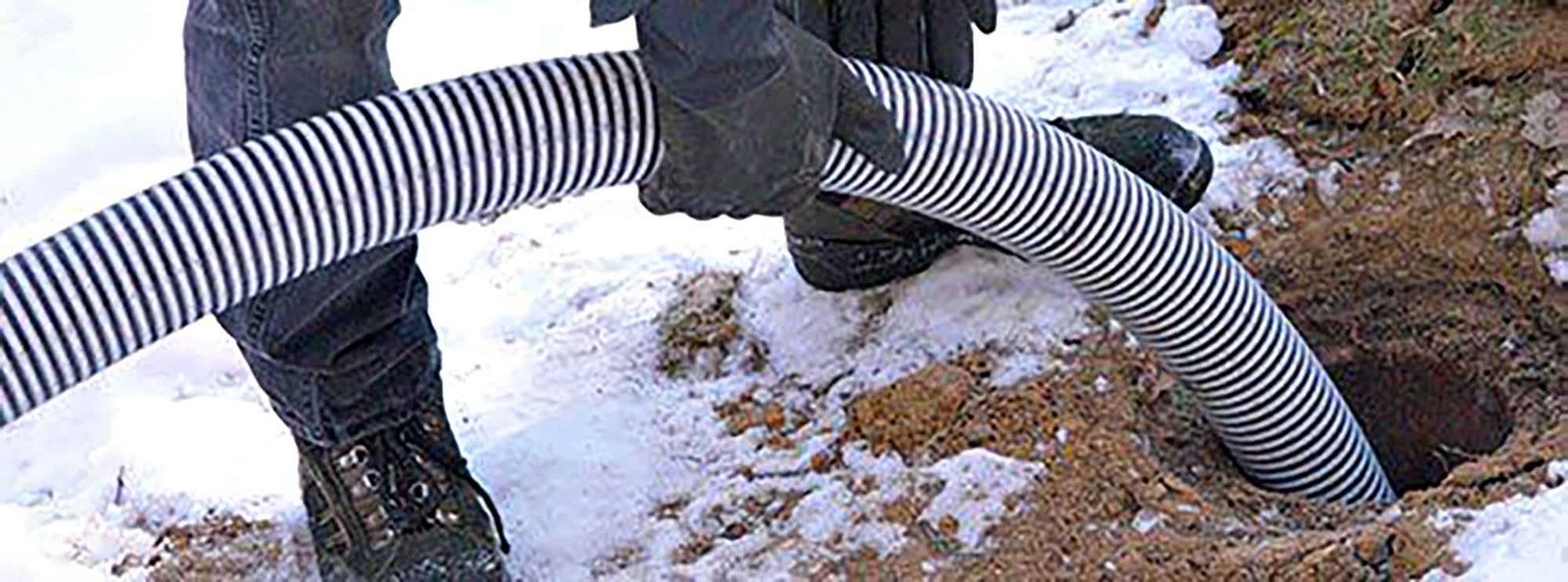
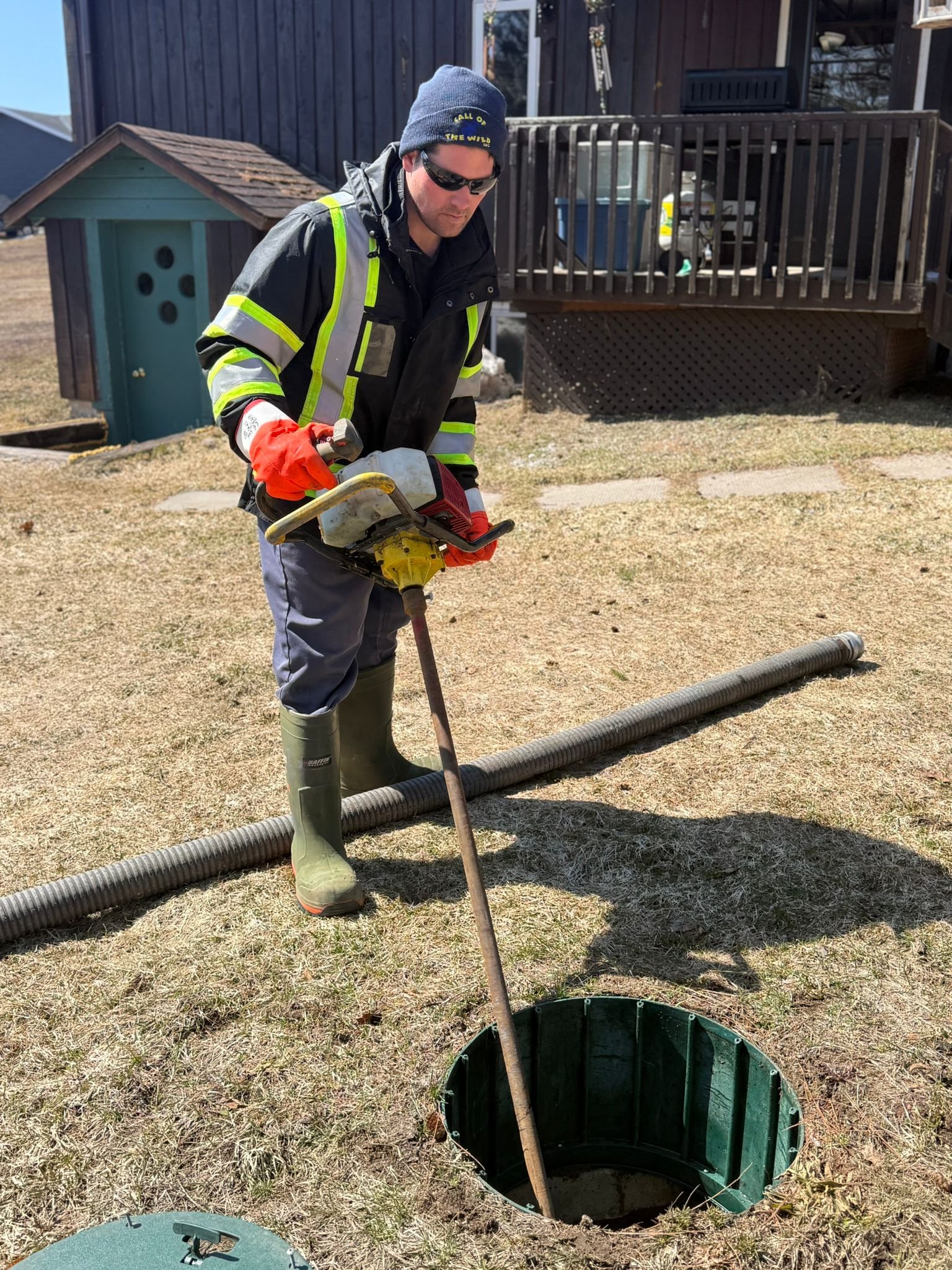
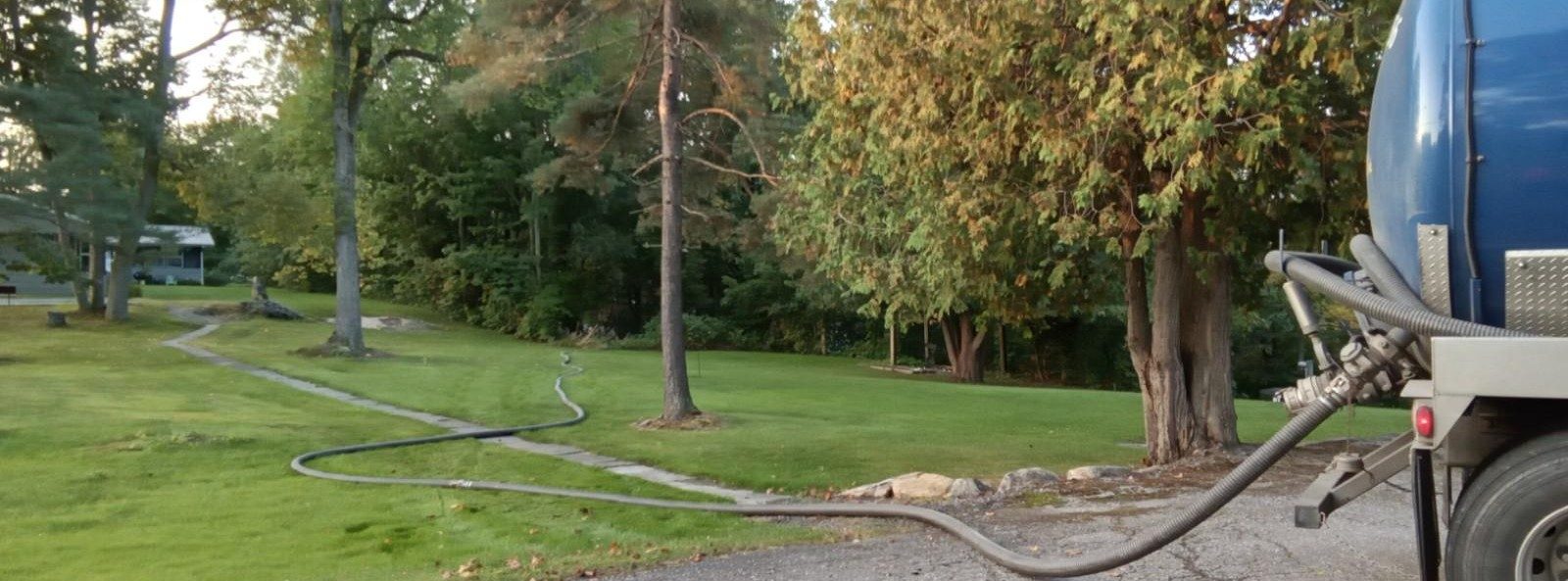
The best time to have your tank pumped out is in the spring or summer time to ensure everything is moving along nicely before the deep freeze of winter comes along.
2. Protect the Drain Field
Your drain field needs insulation, and the snow can help act as a natural insulator. While you don’t want to push more snow onto the area, either by plowing, snow-blowing or shoveling snow onto your septic bed. Allowing the snow to fall and collect onto your drain field acts as a natural insulation that keeps the warmer septic waste from freezing over.
It’s also best to avoid parking on the drain field, this goes for any time of the year as having too much weight on the bed will compact the area too much and could cause costly damages to your drain field or septic tank.
You can also keep your grass a little longer during the winter to add a little extra insulation for your drain field. This can backfire, however, and leave you with snow mould which happens when your grass is left to get wet and has the chance to grow bacteria with the freezing and thawing at the beginning and end of the winter. It can cause dead patches or discolouration in your grass and leave you with uneven spotting when the spring rolls around. But, when your septic tank is in question, a little bit of patchy grass is worth the lack of headaches.
3. Fix Leaks and Drips
A dripping faucet may seem harmless, but constant trickles can overload your system and cause freezing. Before the winter comes, check for any leaky faucets running toilets and dripping outdoor taps that can cause useless water being added to the drain which could cause issues.
A one-time plumbers bill is a lot cheaper than a full septic tank replacement at your property. Some of the fixes may be doable by watching a few good YouTube videos with good directions that can have your problems solved for free in an afternoon, and can save thousands in repairs.
If you notice a leak in your home, you should call a plumber or have it handled well before the winter comes to avoid all the hassles of emergency repairs. Especially if you live down a road that has poor winter access or maintenance on your remote road is soi
4. Add Extra Insulation if Needed
If you have a septic system that is shallow or has a bad habit of freezing when the temperatures drop, you may need to add some extra insulation to the area for over the winter to avoid the whole system from freezing over.
Materials that work best for insulating over the winter include: straw, mulch, leaves and grass. This is why it can be beneficial to leave all your leaves on the ground before the winter, or to push them all over to the septic bed if possible. That way it’ll have a little more warmth for the winter months.
The worst thing you can do for your tank is to use plastic, it traps moisture and can cause even more problems if you try to tarp the area instead of insulating in a safe way.
This can be especially true for seasonal homes or cottages. Without the constant additions to the tank, it’s more likely to freeze faster. Think of it like a stream versus a pond, if there’s constantly movement into the tank, the less likely it will be to freeze up. Whereas a static body of water or septic tank can be easier to freeze up due to inactivity.
5. Know the Signs of a Frozen System
If you’re worried that your system might be freezing, here are some signs to watch for that may indicate that you have a problem.
The first is slow drains or gurgling coming from your drains. This is also a common sign that your tank may be full during the summer months. But if you’re noticing this in the winter, your outlet pipes may be freezing and not allowing the full amount of liquids down the drain and into your tank.
Similarly, if you notice any sewage smells you may have the beginnings of a sewage back up at your property. If you have a sewage back up, you know something is wrong. You should have a plumber out to your property immediately to inspect your pipes and the tank itself, you’re also likely in need of a pump out at that point, in which case we can help you out. Give us a call at Call of The Wild to book a pump out with us.
Final Thoughts
Winterizing your septic system is simple but essential. A little prep now can save you from costly repairs when temperatures drop.
If you want help getting your system ready for winter, we’re here to help. Give us a call to discuss what the right plan for your sanitation needs are.