How Landscaping Choices Can Protect or Damage Your Septic System
Landscaping adds so much value to your home, both for your own pleasure of sitting outside under a big maple tree admiring your freshly mowed grass on a summer night and for resell value of your home. While it’s lovely there are some landscaping choices that should be avoided when thinking about your septic tank and how to keep it running smoothly.
Let’s dig into the dos and don’ts of septic‑friendly landscaping.
1. Trees: Beautiful… but Risky
Tree roots love water. This is a known fact, but what you might not think about when working on your backyard landscaping project is that your septic system has water in it, lots of it. This will cause the roots of the trees to slowly start reaching for that water reserve, getting closer and closer until one day your septic tank is leaking and damaged by tree roots. It can also invade the pipes, crack the tanks and clog your drain field.
All very costly and potentially hazardous to clean up alone. To avoid this, a good rule of thumb is to plant your saplings about 20-30 feet from where your septic bed and drain fields lay. This is typically a safe distance for the majority of trees. For trees that aggressively root like willow trees, silver maples, poplars and elms, it’s best to be safe and double that distance to make sure you have no roots growing towards your tank.
Some beautiful trees that don’t need too much room underground to root are Japanese maples, dogwood trees and gingko trees. These are all beautiful trees with stunning leaves and colour variation, but without the stress of pesky roots taking up your yard.
You can also attempt to create root barriers to stop the spread of horizontal rooting and direct the roots down deeper into your soil instead. For more information about how to install root barriers in the best way possible for your yard, contact your favourite local arborist for more information.
2. Grass Is Your Best Friend
In the recent years there have been a lot of push for alternative methods to cover ‘lawns’ with a different covering other than grass. While this can be good for some areas on your property, near your septic bed, grass is king.
There’s a few benefits of having grass over your septic bed. First, it prevents erosion in your yard; each blade of grass is held down by a tiny root that shoots straight down into the soil and this creates a fibre-like netting that spreads across your yard. This is referred to as anchoring.
It also creates surface protection or shielding, leaves and stems break the fall of any precipitation which helps prevent major soil displacement and run off. Thus, shielding your yard from being washed away!
And finally, grass increases your soil stability by adding extra nutrients and minerals into the earth with any fertilizing you do.
The best thing about grass is that is roots very shallowly and grows quickly. Quick tip: to get better, more strong and lush grass, try watering your lawn a little less frequently with MORE water. This will encourage deeper root growth, therefore strengthening each blade as they reach deeper into the earth to reach that water point. Frequent watering is great for new grass or after a fresh round of grass seed has been placed down.
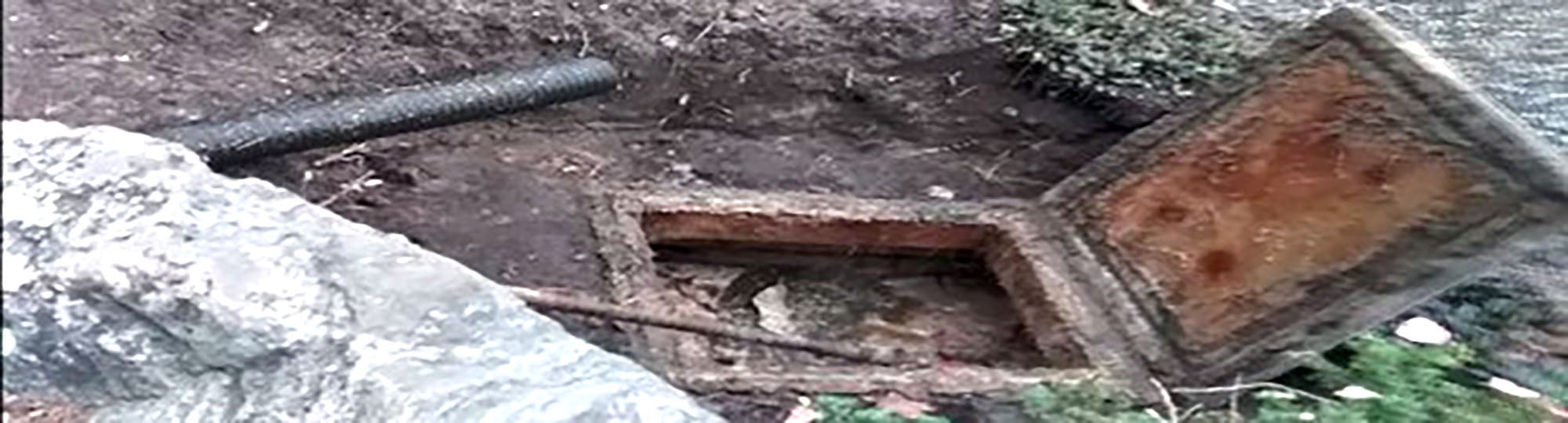
It’s also easy to have grass grow back after your dig out your septic lids, and worst case scenario you can contact a local landscaper to come in and get your lawn back into shape.
3. Avoid Heavy Landscaping Over the Drain Field
Your drain field needs air and space to work properly. It’s best practice to avoid planting anything that roots deeply or requires frequent watering. Don’t plant any vegetable gardens, deeply-rooting plants or shrubs.
Too much water can overwhelm the system, because your drain field is also draining water out into your lawn, you don’t want any flooding to start. It’s best to leave some room around the drain field and septic area and again, just having grass over it is best.
4. No Heavy Structures
It might be tempting to put a shed, patio, or parking area over your drain field but this can create a few issues that can complicate things for you. Heavy weight over your drain field and septic bed can, over time compact the soil and crush any piping underneath. It can also end up preventing proper drainage from your system which could cause back ups if not caught early enough.
Your drain field needs to breathe.
5. Be Careful With Irrigation
Sprinklers and septic systems don’t mix very well and if you have too much water running to the area, it can cause backups into your home. This happens when again, you have an area that is completely saturated with water that is trying to drain out of your system and extra water being added from the sprinklers. Mix those two with frequent rain and location to bodies of water, both of which are so common in Muskoka and you might have an issue.
Keep irrigation lines far away from your system.
Final Thoughts
A little planning goes a long way in protecting your septic system. With smart landscaping choices, you can keep your yard beautiful and your system healthy. If you’re unsure where your tank or drain field is located, we can help you find it before you start planting or talking to a landscaper.
Renting portable toilets isn’t complicated, but there are a few common mistakes that can turn a smooth event into a sanitation nightmare. Luckily, they’re all easy to avoid with a little planning and forward thinking.
Here are the top rental mistakes we see (and how you can dodge them like a pro).
Need Any Help?
Have any questions about our services? Please give us a call!